The Complete Guide to Solar Structures: Types, Components, and Leading Manufacturers & Suppliers in India
Category: Blogs
The rapid growth of India’s solar energy sector has opened new opportunities for companies involved in designing, manufacturing, and installing solar structures.
These structures form the backbone of every solar power project, whether rooftop or ground-mounted, ensuring that solar panels are securely installed, optimally positioned, and built to last.
For those installing solar panels, understanding the types of solar structures, their components, and how to select the right supplier is crucial. This guide walks you through the essentials.
What is a Solar Structure and Why is it Important?
A solar structure is the mounting framework that supports solar panels in residential, commercial, or industrial installations.
It ensures:
-
Stability – Holds panels securely against wind, rain, and seismic forces.
-
Efficiency – Positions panels at the correct tilt for maximum sunlight exposure.
-
Durability – Protects the long-term performance of the system.
Without the right solar structure, even the best-quality panels can underperform or fail prematurely.
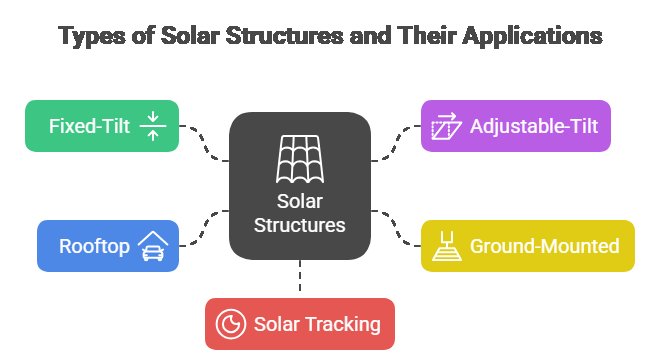
Types of Solar Structures
The right solar structure directly impacts the performance, durability, and ROI of a solar power project. Industrial buyers need to select a design that matches the project’s geography, load conditions, and installation goals. Here are the main types:
1. Fixed-Tilt Solar Structures
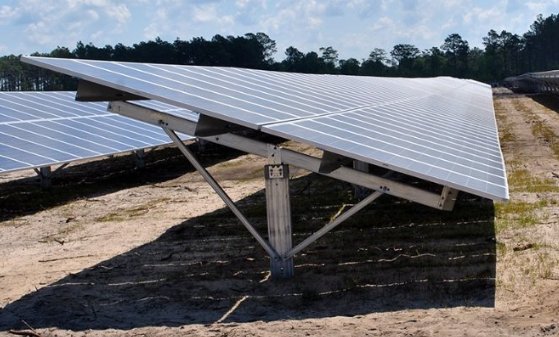
These are the simplest and most cost-effective mounting systems.
-
Design – Panels are set at a fixed angle throughout the year.
-
Advantages – Low installation cost, minimal maintenance, and robust design.
-
Ideal For – Locations with consistent sunlight direction and industrial projects with large, uniform installations.
-
Example – Warehouses in Rajasthan and Gujarat often prefer fixed-tilt due to year-round high sun exposure.
2. Adjustable-Tilt Solar Structures
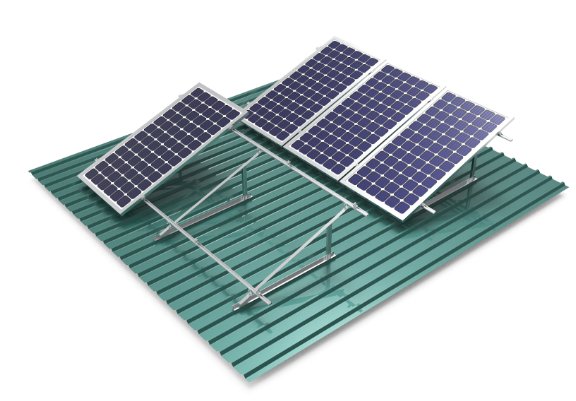
These structures allow you to manually adjust the panel angle based on seasonal sun movement.
-
Design – Tilting brackets or adjustable joints are included in the frame.
-
Advantages – Improved energy yield in areas with distinct summer and winter sun paths.
-
Ideal For – Industrial rooftops and commercial facilities where maximizing output is a priority.
-
Example – Manufacturing plants in North India adjust their tilt twice a year to optimize generation.
3. Ground-Mounted Solar Structures
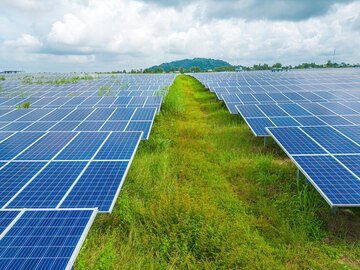
These are installed directly on the ground using foundations or pile-driven supports.
-
Design – Uses rafters, purlins, and base plates anchored into soil or concrete.
-
Advantages – No roof load concerns, flexible orientation, and scalable for large projects.
-
Ideal For – Utility-scale solar farms, industrial parks, and large institutions with unused land.
-
Example – A 5 MW ground-mounted project for an industrial estate in Tamil Nadu uses hot-dip galvanized frames for longevity.
4. Rooftop Solar Structures
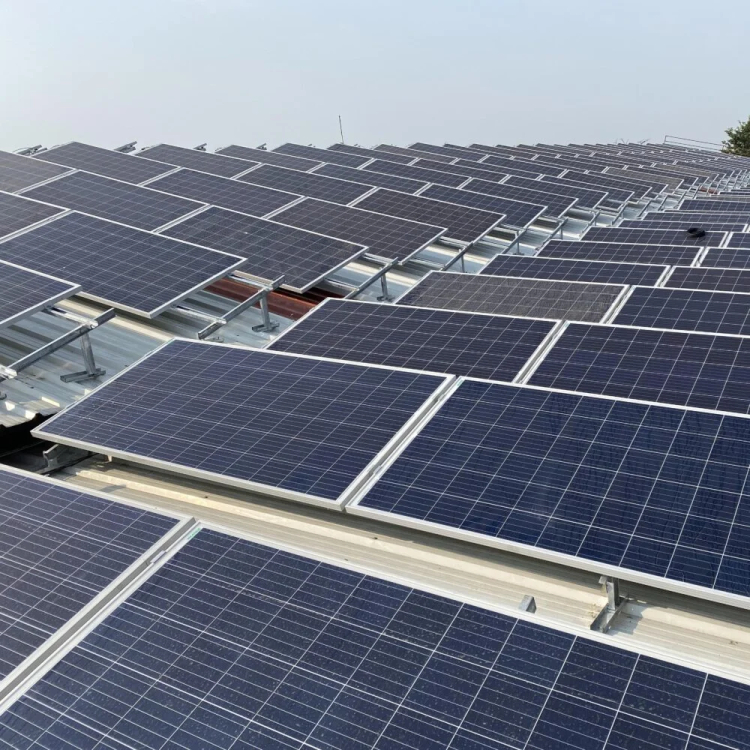
Designed to be installed on flat or sloped roofs.
-
Design – Can be fixed-tilt or adjustable; often lighter to avoid overloading the roof.
-
Advantages – Utilizes unused space, reduces electricity bills, and can be retrofitted on existing buildings.
-
Ideal For – Factories, commercial complexes, and institutional buildings.
-
Example – A textile mill in Maharashtra uses GP-coated rooftop frames to protect against monsoon corrosion.
5. Solar Tracking Systems
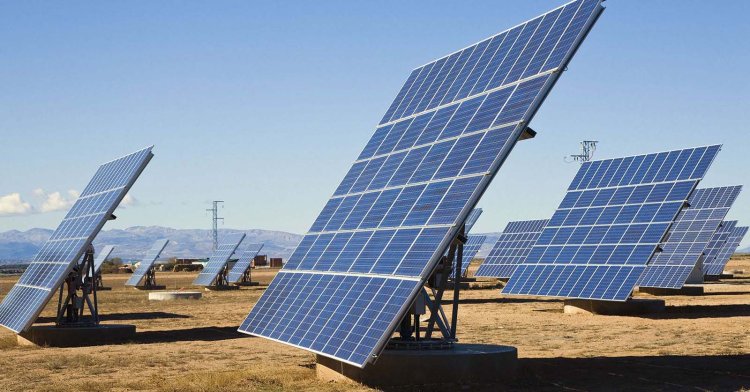
Advanced systems that move the panels to follow the sun’s path during the day.
-
Design – Single-axis trackers follow the sun east to west; dual-axis trackers adjust tilt and orientation.
-
Advantages – Can increase power generation by 15-25% compared to fixed-tilt systems.
-
Ideal For – High-investment projects where maximum yield is the priority.
-
Example – A dual-axis tracker installation in Andhra Pradesh powers an agricultural cold storage facility.
Key Tip for Buyers:
While tracking systems deliver higher efficiency, they require more maintenance and have higher upfront costs. For many industrial buyers, hot-dip galvanized fixed or adjustable structures offer the best balance of cost, durability, and performance.
Key Solar Panel Components
A high-performing solar installation is not just about the panels; it’s also about the quality and design of the solar panel components that make up the mounting structure.
Each component plays a role in ensuring stability, longevity, and optimal energy generation.
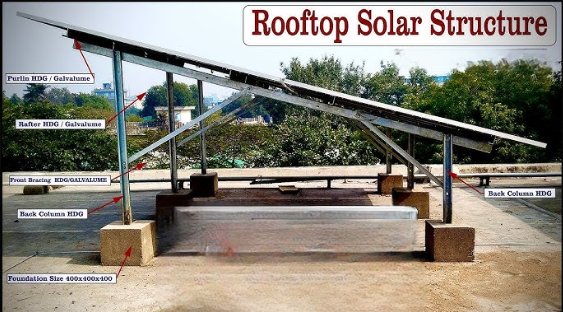
Below are the essential components every industrial buyer should know about:
-
Rafters
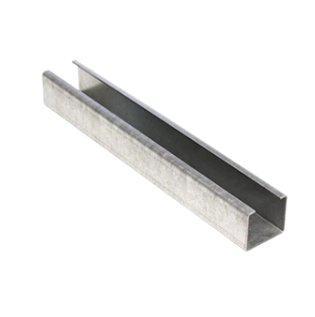
Rafters are the sloped beams that carry the weight of the panels and transfer it to the base plates or supports.
-
Solar Structure Rafter manufacturers use high-strength steel profiles to meet load and wind resistance requirements.
-
A Solar Structure Rafter supplier should offer both standardized and project-specific sizes.
For rooftop solar installations, the commonly used size is C Channel 80x40x15x2 mm.
For Column - Commonly used size is C Channel 80x40x15x2 mm. Some people use higher sections like 140x40x15x2 mm or 150x50x15x2 mm for high-rise buildings or places where wind pressure is higher.
Example: For a ground-mounted system in Rajasthan, custom-length rafters reduced welding time by 40% during on-site assembly.
2. Purlins
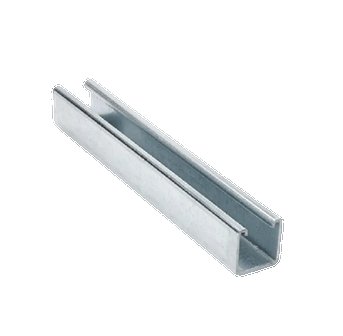
Purlins run horizontally between rafters. Solar Panels are resting on the Purlin.
-
A Solar Structure Purlin manufacturer ensures that these members are perfectly straight for easy panel alignment.
-
Solar Structure Purlin suppliers often provide both C-channel and Z-channel profiles depending on project needs.
-
For rooftop solar installations, the commonly used Strut Channel is of size 41x41x10x2 mm.
-
For ground-mounted solar systems, the commonly used Hat Channel is commonly of thickness 0.9, 1.2 mm of galvalume material.

Example: In a rooftop system for a textile factory, pre-galvanized purlins provided a lightweight yet strong base, reducing roof load stress.
3. Column
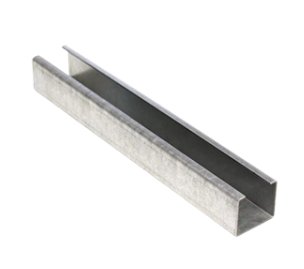
Usually, it is inserted in a concrete slab, and the base plate goes inside the concrete slab.
Some people directly apply it to the roof.
There are two options to fasten them:
-
Mechanical Fasteners - use M10 Anchor Fastener (or Rawl Bolt). Some cracks form in the roof due to drilling, which, over time, water can leak & sometimes weaken the roof.
-
Chemical Fastener - use M10 Anchor Fastener (or Rawl Bolt). Then fill the cracks developed on the roof with chemical solvent so that water leakage is prevented and strength is maintained.
4. Solar Base Plate

The Solar Base Plate acts as the foundation point for vertical posts in both rooftop and ground-mounted systems.
-
It distributes the load evenly to the surface, preventing structural damage.
-
A Solar Base Plate Manufacturer with laser-cutting capability can ensure perfect hole alignment, making installation faster.
-
A Solar Base Plate Supplier that stocks various sizes can support both standard and custom designs.
Example: In an industrial shed installation, hot dip galvanized base plates extended the life of the mounting system by over 15 years.
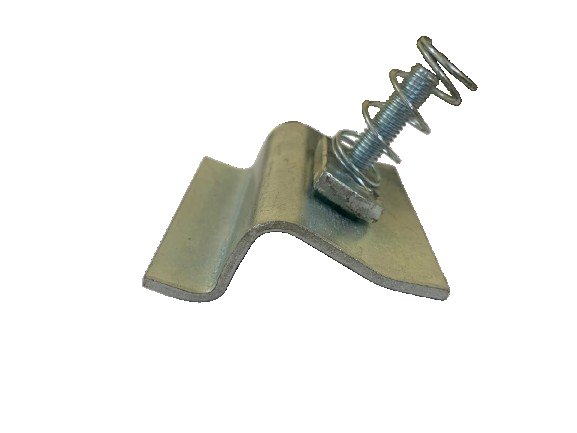
5. Clamps
Clamps hold the solar panels securely to the purlin. They may seem small, but their role in system safety is critical.
-
Solar Panel Mid Clamp –
Placed between two panels to hold them side-by-side, ensuring alignment and stability. -
Many solar panel mid clamp manufacturers design them with anodized aluminum for corrosion resistance.
-
Aluminium Clamps - slightly cheaper but less strength compared to steel, they can bend during high winds, and the panel will fly off.
-
Zinc-plated steel clamps are stronger than aluminum but have less corrosion resistance because zinc plating has a shorter lifespan against corrosion.
-
Strength is dependent on the thickness of the clamp.
-
Bajaj Steels use 3mm, which is thicker than other companies, making our clamps stronger.
-
Hot Dip Galvanized Steel Clamps - strength & corrosion resistance are best.
-
Choosing the right solar panel mid clamp supplier ensures compatibility with your panel thickness and rail profile.
-
Solar Panel End Clamp –
Fixed at the edges of the mounting rails to secure the first and last panels in a row. -
High-quality end clamps are designed to withstand wind uplift and vibrations.
Example: For a 1 MW rooftop project in Gujarat, a combination of anodized aluminum mid clamps and end clamps reduced maintenance needs and prevented corrosion despite heavy monsoon exposure.
6. Jointers
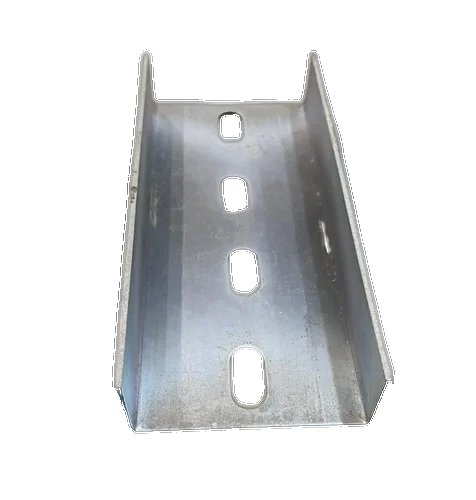
Jointers are essential components used to connect rafters or purlins together in a solar mounting system. These joints ensure structural continuity, distribute loads evenly, and provide the required strength and stability to the overall framework.
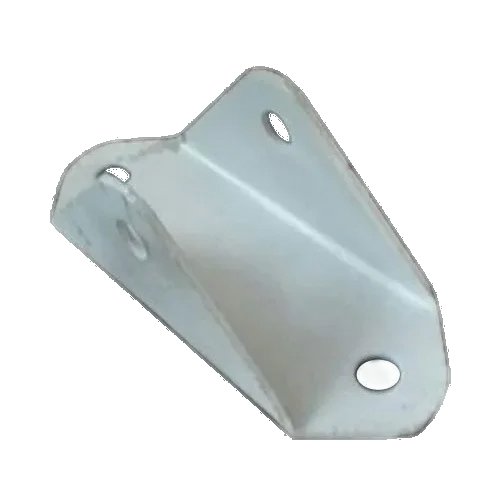
7. Degree Clamp Holders
Degree Clamp Holders are specialized fixtures used to fix solar panels onto walls or inclined surfaces in wall-mounted solar systems.
Unlike ground-mount or rooftop clamps, these are designed to provide secure anchoring and precise angle adjustment, ensuring that the panels receive maximum sunlight exposure throughout the day.
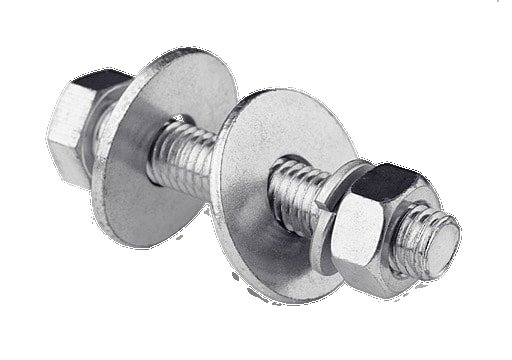
8. Spring Nuts, LN Bolts, Fasteners, Nut Bolts Washers
-
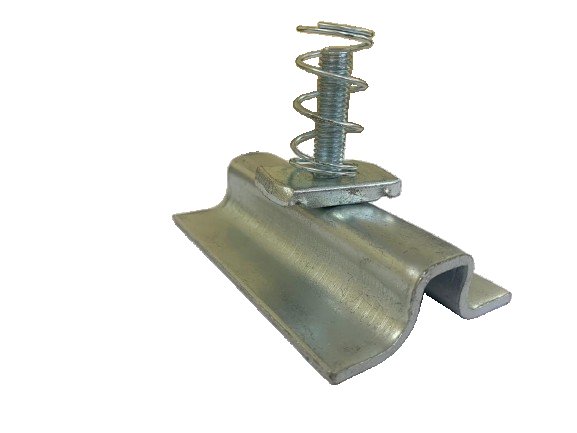
Spring Nut + LN Bolt are used for quick fastening with a firm grip and stability.
-
Nut Bolt Washers are used for an essential fastening set for secure assembly.
Choosing the right solar structure manufacturer ensures each component, whether a clamp, rafter, or base plate, has the right coating for your installation site.
Buyer Insight:
Don’t overlook components just because they are small. In many industrial project failures, poorly designed clamps or undersized rafters were the root cause of performance issues. Always source from proven suppliers like Bajaj Steels, who control both manufacturing and quality testing.
Material Choices & Durability
Material selection determines a solar structure’s lifespan and resistance to corrosion.
1. Pre-Galvanized Steel
-
Cost-effective and used for rooftop solar setups. Not in ground-mounted.
-
Pre-Galvanized Steel: Raw Material is MS Coil with Zinc Coating using Continuous Galvanizing Process.
-
Commonly used coating is 80 GSM (which is approximately 10-12 microns of Zinc).
-
Corrosion life is less out of all options, but cost is the cheapest out of the options.
-
Important to trust the Structure supplier (like BSIL), which uses GP Coil from reputed raw material suppliers for the best corrosion protection.
-
Choose a trusted pre-galvanized Solar Structure supplier or pre-galvanized solar Structure Manufacturer for consistent quality.
2. Hot Dip Galvanized Steel
-
Hot Dip Galvanization - Material is batch galvanized in a molten zinc kettle. Zinc coating is 610 GSM (80-90 micron). This offers the best protection, but is the most expensive option.
-
Due to high temperature & time given to steel during galvanization, Zinc forms a layer with the steel surface, which gives a very long life.
-
BSIL sister concern (Global Smelter Limited) has 10 years of experience in the Power sector, manufacturing of hot dip galvanized tower structures for Transmission Line, Substations, Telecommunication, Power Distribution, etc. We have an in-house 7 mtr & 3.5 mtr Galvanization kettle
-
Superior corrosion resistance, suitable for harsh weather conditions.
-
Partner with a hot-dip galvanized solar structure manufacturer or hot-dip galvanized solar structure supplier for long-term durability.
3. Galvalume Steel
-
Galvalume is an alloy of 55% aluminum, 43.5% zinc, and 1.5% silicon. It combines aluminum and zinc coating for exceptional corrosion protection.
-
Has a better life than GP, but less than Hot Dip Galvanized (HDG). Cost is also in between the GP and HDG.
-
Used primarily for ground mount projects
-
A Galvalume Solar Structure supplier or Galvalume Solar Structure Manufacturer is ideal for coastal or high-humidity regions.
Magsure - Developed by JSW, primarily for solar projects. used near seaside/water bodies where corrosion of steel is very high. This is an alloy of Zinc, Magnesium, and Aluminium. This has self self-healing property on cuts.
Leading Manufacturers & Suppliers in India
When it comes to dependable solar mounting solutions in India, Bajaj Steels stands out as one of the most trusted names in the industry. With decades of manufacturing expertise in the power transmission & distribution sector, Bajaj Steels has built a strong reputation for delivering high-quality solar structures and precision-engineered solar panel components that meet industrial standards.
Why Bajaj Steels is a Preferred Choice:
There are many reasons why Bajaj Steel is the best option for Solar Mounting Structures and its components.
-
Guaranteed 24 Hour delivery across all UP. Save on cash flow. Get a lorry after payment in 1 day, instead of 5 days.
-
50% Less Freight
-
Ultimate Strength.
-
Comprehensive Product Range – From Rafters, Purlins, Columns, Base Plate, Clamps, Jointers, Degree Clamp Holders, Spring Nuts, LN Bolts, Fasteners, Nut Bolts to Washers. Bajaj Steels offers complete mounting solutions.
-
Material Excellence – Specializes in pre-galvanized, hot dip galvanized, GP, and Galvalume solar structures to suit varying environmental conditions.
-
Customization Capabilities – Designs tailored to specific site layouts, load requirements, and client preferences.
-
Nationwide Supply Network – Whether you need a Solar Structure Manufacturer or supplier in Kanpur or large-scale delivery, Bajaj Steels guarantees 24-hour delivery across all UP
Product Specializations at Bajaj Steels
Bajaj Steels offers a diverse range of solar mounting solutions, catering to both rooftop and ground-mounted projects. Their portfolio includes:
-
Pre-Galvanized Solar Structures – Manufactured with precision to meet industrial load requirements, supplied across India through a reliable distribution network.
-
Hot Dip Galvanized Solar Structures – Built for maximum corrosion resistance, ideal for coastal and high-humidity regions.
-
GP Solar Structures – Known for their smooth finish and strong rust protection, suitable for a variety of installations.
-
Galvalume Solar Structures – Combining aluminum and zinc coating for superior durability in harsh climates.
-
Solar Structure Rafters and Purlins – Engineered to provide strong support and even load distribution for panels.
-
Apollo Solar Structures – High-strength mounting frames are widely used in large-scale projects.
-
Solar Panel Mid Clamps and End Clamps – Designed for secure panel fastening with precise alignment.
-
Solar Base Plates – Heavy-duty foundations ensure long-term stability of the structure.
-
Mounting Structure Accessories - C Channel, Strud Channel, Jointers, Degree Holders, Nut Bolts, Washers, Spring Nut, and LN Bolt help in supporting and providing strength to solar panels.
As both a solar structure manufacturer and supplier, Bajaj Steels ensures that every product is manufactured to exacting quality standards and delivered on schedule.
We have their manufacturing facility, which allows them to maintain full control over quality while meeting the timelines of large industrial projects.
Buying Considerations for Industrial Projects
When selecting a solar structure and supplier for your project, focus on:
-
Durability – Consider galvanization type, thickness, and material quality.
-
Design Compatibility – Ensure the structure suits your panel type and site conditions.
-
Ease of Installation – Prefabricated and modular designs save time and labor.
-
Supplier Reputation – Choose suppliers with proven project experience and strong after-sales support.
-
Cost vs. Lifespan – Balance upfront investment with expected operational life.
Final Thoughts
A well-designed solar structure is not just a support system; it’s a performance enhancer for your entire solar installation.
From solar panel components like clamps and base plates to the choice of galvanization, every detail impacts efficiency, longevity, and return on investment.
If you are planning a large-scale solar project in India, partner with a reliable Solar Structure Manufacturer or Solar Structure Supplier who understands your industrial requirements.
The right choice today will ensure sustainable energy generation for decades.
Frequently Asked Questions (FAQs)
1. What is a solar structure, and why is it important?
A solar structure is the mounting framework that holds solar panels in place. It ensures panels are positioned at the correct tilt and securely fastened to withstand wind, rain, and other environmental stresses. Without a durable solar structure, even the best-quality panels can lose efficiency or fail prematurely.
2. Which type of solar structure is best for industrial projects?
The best choice depends on project size, location, and budget.
-
Fixed-tilt systems are cost-effective and low-maintenance.
-
Adjustable-tilt systems offer higher efficiency in regions with seasonal sun variations.
-
Ground-mounted systems are ideal for large-scale projects with available land.
Consulting an experienced solar structure manufacturer can help determine the right option for your site.
3. What are the key components of a solar structure?
The main components include:
-
Rafters and purlins for support.
-
Solar panel mid-clamps and end clamps for panel fastening.
-
Solar base plates for stable foundations.
-
Galvanized frames for corrosion resistance.
Each component must be precision-engineered for long-term durability and performance.
4. What is the difference between pre-galvanized, hot dip galvanized, and Galvalume structures?
-
Pre-galvanized – Affordable and suitable for moderate climates.
-
Hot dip galvanized – Best for coastal or high-humidity areas due to superior corrosion resistance.
-
Galvalume – Aluminum-zinc coating offers exceptional durability in harsh weather.
5. How do I choose the right solar structure supplier?
Look for suppliers with:
-
Reliable delivery
-
1-stop solution for all your solar structure & accessories.
-
Proven experience in industrial-scale projects.
-
High-quality material certifications.
-
Customization capabilities.
-
Strong after-sales service.
Brands like Bajaj Steels combine manufacturing expertise with a reliable supply chain, making them a preferred choice for industrial buyers.
6. Can solar structures be customized for my project?
Yes. Leading solar structure manufacturers can design frames, rafters, and clamps to match specific panel sizes, roof types, and site conditions. Customization ensures optimal performance, safety, and compliance with local installation standards.